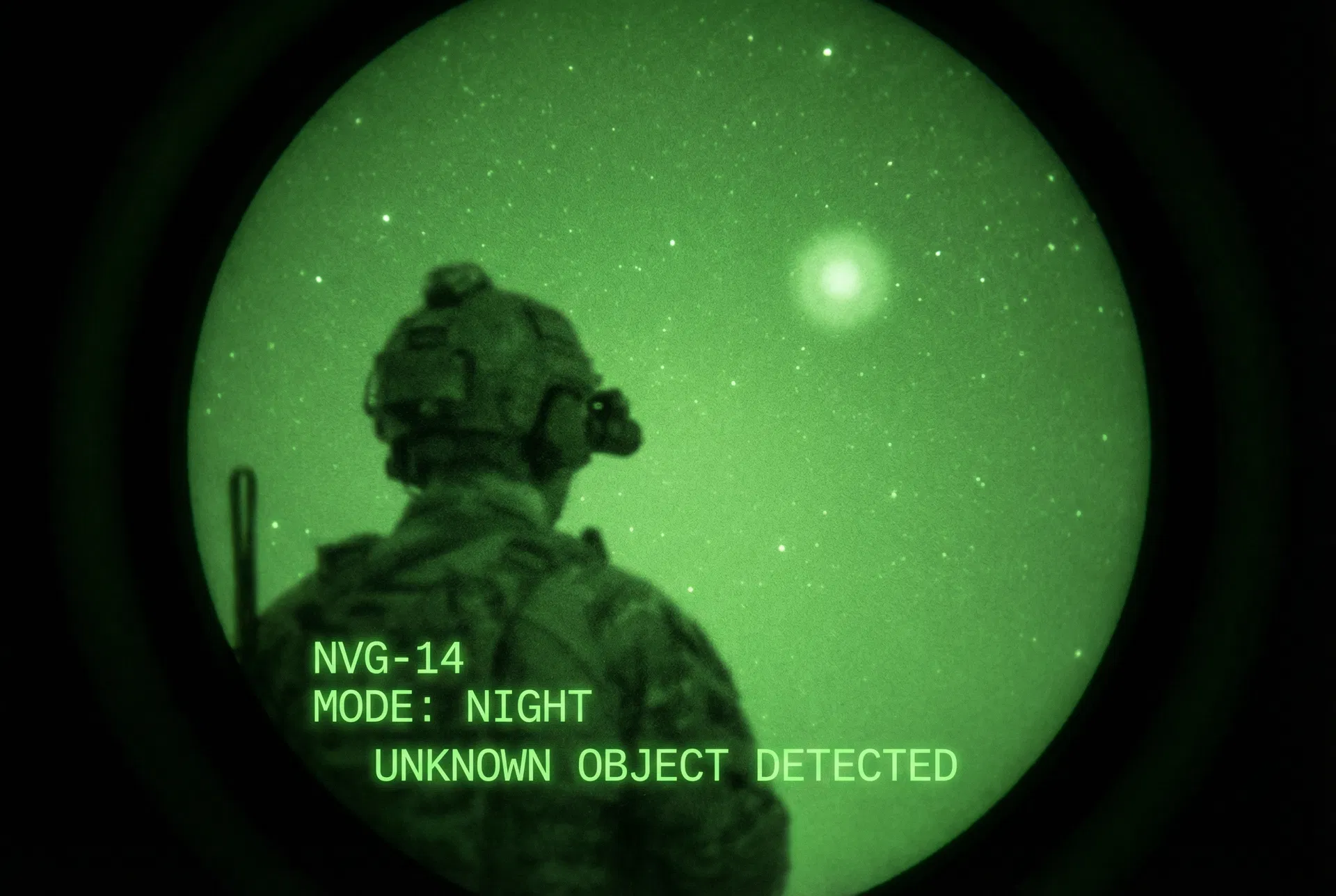
Best Night Vision Goggles for UFO Hunting: A Complete Guide
Everything you need to know about night vision technology for UAP hunting, including Gen 1-3 comparisons and top product recommendations.
Best Night Vision Goggles for UFO Hunting: A Complete Guide
1. Introduction: Unveiling the Night Sky for UAP/UFOs
The night sky has always held a profound allure, a canvas of stars and mysteries that beckons humanity to look up and wonder. For those captivated by the enigma of Unidentified Aerial Phenomena (UAPs) or Unidentified Flying Objects (UFOs), the nocturnal hours offer a unique window into the unexplained. However, the very darkness that shrouds these potential phenomena also presents a significant challenge to observation. This is where night vision technology becomes not just an advantage, but a crucial tool for serious skywatchers, investigators, and enthusiasts alike.
This comprehensive guide will delve into the world of night vision goggles, specifically tailored for the pursuit of UAPs and UFOs. We will explore the underlying technologies, highlight key features to consider when making a purchase, recommend top-tier products, and provide insights into how to maximize your night-time observations. Our aim is to equip you with the knowledge to select the best gear, transforming your nocturnal sky-gazing into a more informed and potentially revelatory experience.
2. Understanding Night Vision Technology: How it Works
Before diving into specific product recommendations, it's essential to grasp the fundamental principles behind night vision technology. There are primarily three types of night vision relevant to UAP/UFO hunting, each with its own strengths and limitations:
Image Intensification (I2)
Image Intensification (I2), often referred to as analog night vision, is the most traditional and widely recognized form of night vision. These devices work by collecting the faint ambient light (from stars, the moon, or distant city lights) and amplifying it thousands of times to create a visible image. The process involves a photocathode that converts photons into electrons, which are then accelerated and multiplied by a microchannel plate (MCP). These amplified electrons then strike a phosphor screen, converting them back into visible light, typically in shades of green (though white phosphor is also available). I2 devices excel in low-light conditions, offering a natural, real-time view with minimal latency.
Digital Night Vision
Digital Night Vision operates more like a digital camera. It uses a highly sensitive Charge-Coupled Device (CCD) or Complementary Metal-Oxide-Semiconductor (CMOS) sensor to capture available light, which is then processed digitally and displayed on a small LCD or OLED screen. A significant advantage of digital night vision is its versatility; many devices can record video and still images, and some offer color night vision in certain light conditions. They are generally more affordable than high-end I2 systems and are not susceptible to damage from bright light exposure, unlike their analog counterparts. However, they often have a slight lag in the image and may not perform as well as high-generation I2 in extremely dark environments.
Thermal Imaging
Thermal Imaging, unlike I2 and digital night vision, does not rely on visible light at all. Instead, it detects the infrared energy (heat) emitted by objects. Everything with a temperature above absolute zero emits thermal radiation, and thermal cameras convert these temperature differences into a visible image. This technology is particularly valuable for UAP/UFO hunting because it can detect objects that emit heat but are otherwise invisible to the naked eye or even traditional night vision – such as objects cloaked or camouflaged, or those operating at high altitudes where ambient light is scarce. Thermal imagers can penetrate fog, smoke, and light foliage, making them an invaluable tool for detecting anomalies that might otherwise be missed. However, they do not provide the same level of detail as I2 or digital night vision, as they render images based on heat signatures rather than visual light.
3. Key Features to Consider When Choosing Night Vision Goggles for UFO Hunting
Selecting the right night vision goggles for UAP/UFO hunting requires careful consideration of several key features. The ideal device will balance performance, durability, and user comfort to enhance your observational capabilities.
Generation (Gen 1, 2, 3, 4)
For Image Intensification (I2) devices, the term "generation" refers to the technological advancement of the image intensifier tube. Each generation offers improvements in resolution, light amplification, and overall performance:
-
Generation 1 (Gen 1): The oldest and most affordable technology. Offers basic light amplification but often suffers from image distortion, a short lifespan, and requires a significant amount of ambient light or an IR illuminator to function effectively. Not ideal for serious UAP/UFO investigation.
-
Generation 2 (Gen 2): A significant improvement over Gen 1, incorporating a microchannel plate (MCP) for better light amplification and a clearer image. Gen 2 devices offer good performance in low-light conditions and are a popular choice for enthusiasts due to their balance of performance and cost.
-
Generation 3 (Gen 3): Features a gallium arsenide (GaAs) photocathode, which provides superior sensitivity and resolution, especially in extremely low light. Gen 3 devices are the standard for military and law enforcement applications and offer exceptional performance for UAP/UFO hunting, albeit at a higher price point.
-
Generation 4 (Gen 4) / Filmless: While not officially recognized as a separate generation by some, "filmless" or "autogated" Gen 3 devices represent the pinnacle of I2 technology. They remove the ion barrier film from the MCP, allowing for even greater light amplification and a cleaner image, particularly in dynamic lighting conditions. These are the most advanced and expensive I2 systems available.
Resolution and Clarity
High resolution is paramount for identifying distant and potentially small objects in the night sky. Measured in line pairs per millimeter (lp/mm) for I2 devices, or pixels for digital and thermal imagers, a higher number indicates a sharper, more detailed image. Clarity refers to the overall crispness and lack of distortion in the image, allowing for better discernment of shapes, movements, and subtle details that could be indicative of a UAP.
Field of View (FOV)
For scanning the vast expanse of the night sky, a wide Field of View (FOV) is highly advantageous. A broader FOV allows you to cover more area simultaneously, increasing the likelihood of spotting a fast-moving or unexpected object. While high magnification can bring distant objects closer, it often comes at the expense of FOV, making it a trade-off to consider based on your primary observation strategy.
Magnification
Magnification brings distant objects closer, which is crucial for detailed examination once a potential UAP has been spotted. However, excessive magnification can reduce FOV and make the image more susceptible to handshake and instability. Many night vision goggles offer 1x magnification (true vision) for wide-area scanning, with some models featuring optical zoom or digital zoom for closer inspection. A good balance is often a device with moderate magnification (e.g., 3x-5x) or the ability to switch between different magnification levels.
Infrared (IR) Illuminators
In conditions of extreme darkness, where even ambient starlight is insufficient for I2 or digital night vision, an Infrared (IR) illuminator becomes essential. These devices emit infrared light, which is invisible to the human eye but detectable by night vision devices, effectively illuminating the scene without alerting human observers. Many night vision goggles have built-in IR illuminators, while others allow for external, more powerful IR lights to be attached. When choosing, consider the range and beam adjustability of the IR illuminator.
Durability and Weather Resistance
UAP/UFO hunting often involves outdoor observations in various conditions. Therefore, your night vision goggles must be durable and weather-resistant. Look for devices with robust housings, often made from aerospace-grade aluminum or high-impact polymers, that can withstand accidental drops and bumps. IPX ratings (e.g., IPX4 for splash resistance, IPX7 for submersion) indicate the level of protection against dust and water. A device that can endure moisture, dust, and temperature fluctuations will be a reliable companion in the field.
Battery Life
Extended observation sessions require reliable power. Consider the battery type (e.g., AA, CR123A, rechargeable packs) and the expected battery life of the night vision goggles. Some devices offer power-saving modes or the ability to connect to external power banks, which can be invaluable during long nights of skywatching. Always carry spare batteries, especially for remote locations.
Comfort and Ergonomics
For prolonged use, comfort and ergonomics are critical. Head-mounted goggles allow for hands-free operation, which is ideal for scanning the sky or operating other equipment simultaneously. However, they can be heavier and cause neck strain over time. Handheld monoculars or binoculars offer more flexibility but require constant holding. Consider the weight distribution, strap adjustability, and overall feel of the device. If possible, try on different models to assess their comfort before purchasing.
4. Top Night Vision Goggles for UFO Hunting: Product Recommendations
Based on their performance, features, and suitability for UAP/UFO observation, here are some of the top night vision goggles to consider. We've included a mix of technologies and price points to cater to different needs and budgets.
ATN PVS7-3 Night Vision Goggles
The ATN PVS7-3 Night Vision Goggles are a robust and highly regarded option, often considered a workhorse in the Gen 3 category. These are military-grade goggles designed for hands-free operation, making them excellent for extended sky scanning. They offer exceptional clarity and light amplification, allowing for detailed observation even in very dark conditions. The PVS7-3 typically features a wide 40-degree field of view, which is crucial for covering large areas of the sky. While a significant investment, their performance and durability make them a top choice for serious investigators.
- Pros: Military-grade performance, excellent low-light sensitivity, wide FOV, durable.
- Cons: High cost, heavier than some alternatives.
- Affiliate Link Placeholder: Check Price on Amazon
- Affiliate Link Placeholder: Explore ATN Website
Bering Optics UFO SKYWATCH PRO GEN 2+
As its name suggests, the Bering Optics UFO SKYWATCH PRO GEN 2+ is specifically marketed towards sky observation and UAP detection. This device utilizes a high-performance Gen 2+ image intensifier tube, offering a significant upgrade over standard Gen 2. It's designed to provide clear, bright images with good resolution, making it easier to spot and track objects in the night sky. Its ergonomic design and relatively lightweight construction make it comfortable for prolonged use. This model often strikes a good balance between performance and affordability for dedicated enthusiasts.
- Pros: Optimized for skywatching, good Gen 2+ performance, reasonable price for its capabilities.
- Cons: Not Gen 3 level performance, may require external IR in absolute darkness.
- Affiliate Link Placeholder: Find on Amazon
Creative XP Night Vision Goggles Elite
The Creative XP Night Vision Goggles Elite represent a popular choice in the digital night vision category. These goggles are known for their ability to capture clear images and videos in complete darkness, thanks to a powerful built-in IR illuminator. They often feature adjustable magnification, allowing users to zoom in on distant objects, and a wide viewing screen for comfortable observation. The ability to record footage is a significant advantage for documenting potential UAP sightings, providing valuable evidence for later analysis. They are generally more budget-friendly than I2 devices.
- Pros: Digital recording capabilities, built-in IR, adjustable magnification, more affordable.
- Cons: Digital lag, image quality may not match high-end I2 in all conditions.
- Affiliate Link Placeholder: View on Amazon
Nightfox Digital Night Vision Devices
Nightfox offers a range of popular digital night vision devices that are well-suited for casual to serious UAP/UFO observation. Models like the Nightfox 110R or Nightfox Swift are known for their user-friendly interfaces, robust IR illumination, and ability to capture decent quality photos and videos. They provide a cost-effective entry point into night vision technology, allowing enthusiasts to explore the night sky without a substantial investment. While they are digital, many users find their performance more than adequate for spotting anomalies.
- Pros: Affordable, easy to use, good for recording, strong IR illuminators.
- Cons: Digital image quality, not as sensitive as I2 in passive mode.
- Affiliate Link Placeholder: Shop Nightfox on Amazon
5. Enhancing Your UFO Hunting Experience with Night Vision
Owning a pair of night vision goggles is just the first step. To truly maximize your UAP/UFO hunting success, it's crucial to integrate them into a broader observational strategy.
Observation Techniques: Scanning the Sky, Identifying Anomalies
Effective observation involves more than just pointing your goggles skyward. Develop a systematic scanning pattern to cover the entire visible sky, moving slowly and deliberately to avoid missing subtle movements. Pay attention to unusual light patterns, erratic movements, or objects that defy conventional aircraft behavior. Remember that many natural phenomena (satellites, planes, meteors, even insects close to the lens) can be mistaken for UAPs, so critical thinking and cross-referencing are essential.
Combining with Other Gear: Telescopes, Cameras
Night vision goggles are powerful on their own, but their effectiveness can be significantly enhanced when combined with other observational tools:
- Telescopes: While night vision excels at wide-field scanning, a telescope can provide much higher magnification for detailed examination of a stationary or slow-moving object once it's been identified. Some advanced setups allow for night vision devices to be mounted to telescopes for enhanced viewing.
- Cameras: Documenting your sightings is paramount. Cameras like the Nikon Coolpix P1000 (with its incredible 125x optical zoom) or the Panasonic LUMIX FZ80 are excellent for capturing high-resolution photos and videos of distant objects, even in low light. Integrating a camera allows you to record evidence that can be analyzed later and shared with the UAP/UFO research community. Many digital night vision goggles also have built-in recording capabilities, offering a convenient all-in-one solution.
Safety and Best Practices: Avoiding Light Pollution, Respecting Privacy
- Minimize Light Pollution: Seek out observation sites far away from urban centers to reduce light pollution, which can severely degrade night vision performance and obscure faint objects. Dark sky preserves are ideal.
- Protect Your Night Vision Devices: Avoid exposing I2 devices to bright light, as this can damage the intensifier tube. Always use lens caps when not in use. Handle all equipment with care to maintain its delicate optics and electronics.
- Respect Privacy and Property: Always be mindful of your surroundings and respect the privacy of others. Avoid pointing night vision devices or cameras into private residences. Obtain permission before observing on private land.
- Stay Informed: Keep up-to-date with the latest UAP/UFO news, research, and official reports. Understanding current events and scientific discourse will enhance your investigative approach.
6. Recommended Reading for the Serious UAP/UFO Investigator
Beyond the equipment, a deep understanding of the UAP/UFO phenomenon is crucial. These books offer invaluable insights, historical context, and critical analysis from respected researchers and authors:
-
"Above Top Secret: The Worldwide UFO Cover-up" - Timothy Good
- Why it's relevant: Good's extensive research and interviews with military and intelligence personnel provide a compelling, albeit controversial, look into alleged government involvement and cover-ups related to UFOs. It's a foundational text for understanding the political and secretive aspects of the phenomenon.
- Affiliate Link Placeholder: Find on Amazon
-
"Passport to Magonia" - Jacques F. Vallée
- Why it's relevant: Vallée, a renowned astrophysicist and computer scientist, offers a groundbreaking perspective by comparing modern UFO sightings with folklore and mythological encounters. This book challenges conventional explanations and suggests a deeper, more complex reality behind the phenomenon, moving beyond the simple extraterrestrial hypothesis.
- Affiliate Link Placeholder: Find on Amazon
-
"UFOs: Generals, Pilots and Government Officials Go on the Record" - Leslie Kean
- Why it's relevant: Kean's meticulously researched book presents credible testimonies from high-ranking military, government, and aviation officials who have witnessed or investigated UAPs. It provides a powerful argument for the reality and seriousness of the phenomenon, pushing for greater transparency and scientific inquiry. This book is crucial for understanding the shift in official discourse around UAPs.
- Affiliate Link Placeholder: Find on Amazon
-
"Area 51: An Uncensored History" - Annie Jacobsen
- Why it's relevant: Jacobsen's investigative work delves into the secretive history of Area 51, a site long associated with UFO conspiracy theories. While it focuses on the development of advanced aircraft and intelligence operations, it provides essential context for the culture of secrecy surrounding unexplained aerial phenomena and the government's historical involvement in such matters.
- Affiliate Link Placeholder: Find on Amazon
-
"Encounters: Experiences with Nonhuman Intelligences" - D.W. Pasulka
- Why it's relevant: Pasulka, a professor of religious studies, explores the cultural and spiritual dimensions of UFO encounters, moving beyond purely scientific or technological explanations. Her work offers a unique perspective on how individuals interpret and integrate these experiences into their worldview, providing a broader understanding of the phenomenon's impact.
- Affiliate Link Placeholder: Find on Amazon
-
"The UFO Experience: A Scientific Inquiry" - J. Allen Hynek
- Why it's relevant: Written by the astronomer who coined the terminology, Hynek's book is a pioneering effort to apply scientific methodology to UFO sightings. It's essential for anyone seeking a rigorous, evidence-based approach to the phenomenon and understanding the classification of different types of encounters.
- Affiliate Link Placeholder: Find on Amazon
7. Conclusion: Your Gateway to the Unexplained
The quest to understand UAPs and UFOs is a journey into the unknown, a pursuit that demands curiosity, diligence, and the right tools. Night vision goggles are more than just gadgets; they are powerful extensions of our senses, opening up a realm of nocturnal observation that was once inaccessible. By amplifying the faint whispers of light from distant stars and hidden phenomena, these devices empower you to become a more effective and informed UAP/UFO investigator.
Equipped with the knowledge of night vision technologies, key features to consider, and top product recommendations, you are now better prepared to choose the gear that suits your investigative style. Remember to combine your night vision efforts with sound observation techniques, integrate other valuable tools like telescopes and cameras, and always prioritize safety and ethical practices. The night sky holds countless secrets, and with the right night vision goggles, you hold a key to unlocking some of its most profound mysteries. Happy hunting, and may your skies be filled with wonder and discovery.
IN THIS ARTICLE
- Introduction
- Key Considerations
- Top Recommendations
- Best Practices
- Conclusion
Shop recommended gear on Amazon:
SHOP ON AMAZON →Related Articles
 EQUIPMENT
The Best Telescopes for UFO and UAP Skywatching in 2026: An Investigator's Guide
A comprehensive guide to the best telescopes for observing and documenting UAPs in 2026, from beginner-friendly to advanced computerized models.
EQUIPMENTBest Cameras for Capturing UFO Sightings in 2026: An Investigator's Guide
The best cameras for capturing high-quality UAP footage, from ultra-zoom bridge cameras to dedicated astrophotography rigs.
 BOOKS
BOOKSThe 10 Best UFO and UAP Books Every Enthusiast Should Read
The definitive reading list for UAP enthusiasts — from scientific inquiries to government whistleblower accounts.