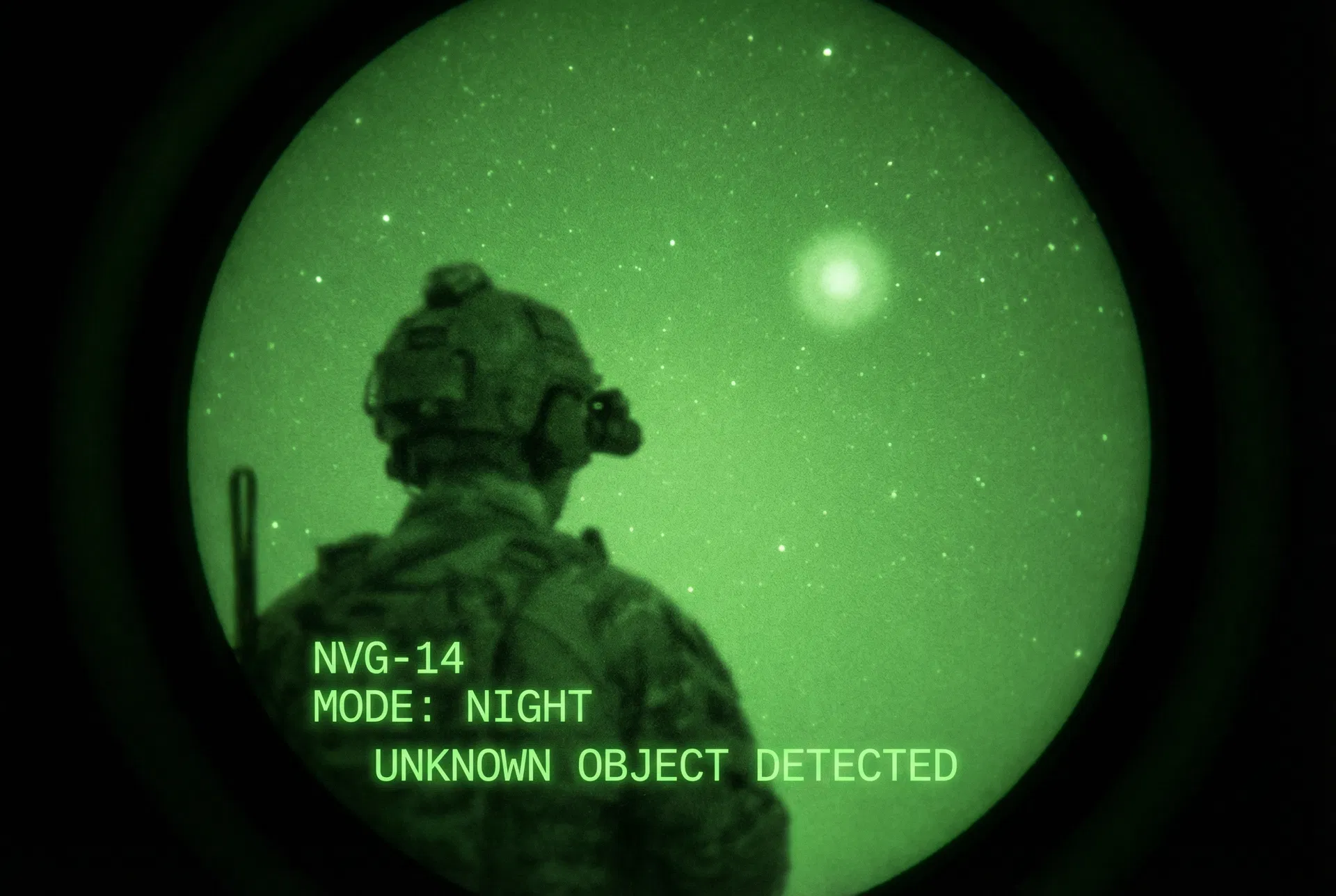
How to Analyze UFO Videos Like an Expert: A Guide for the Curious Investigator
Learn the methodologies used by professional analysts to evaluate UAP footage and separate genuine anomalies from misidentifications.
How to Analyze UFO Videos Like an Expert: A Guide for the Curious Investigator
The internet is flooded with grainy, shaky footage of mysterious lights and objects in the sky. From fleeting glimpses on a smartphone to detailed recordings from military aircraft, videos of Unidentified Anomalous Phenomena (UAP), more commonly known as UFOs, have captivated the public imagination for decades. The allure is undeniable: each video holds the potential for a groundbreaking discovery, a glimpse into the unknown that could change our understanding of the world and our place in it. But with the rise of sophisticated video editing software and the prevalence of mundane objects being misidentified, how can you, the curious observer, separate credible evidence from the noise? This guide will equip you with the tools, techniques, and critical mindset used by seasoned investigators to analyze UFO videos like an expert. As the conversation around UAP shifts from the fringes to the halls of government, developing these analytical skills is more important than ever.
The Analyst's Mindset: Approaching the Evidence
Before diving into the technical aspects of video analysis, it is crucial to cultivate the right mindset. The field of UAP investigation is fraught with biases, both from fervent believers eager to confirm extraterrestrial visitation and staunch skeptics quick to dismiss anything unexplained. To truly analyze UFO videos like an expert, objectivity is paramount. This means consciously setting aside preconceived notions and approaching each piece of evidence with an open mind, allowing the data to lead you to conclusions rather than forcing the data to fit a pre-existing narrative.
At the heart of expert analysis lies a blend of curiosity and critical thinking. Curiosity drives the desire to explore the unknown and ask probing questions, while critical thinking provides the framework for evaluating the answers. This involves questioning assumptions, scrutinizing sources, and considering alternative explanations. Remember, the burden of proof rests on those making extraordinary claims. While a video might appear compelling, it is the responsibility of the analyst to determine if the evidence presented is sufficient to support such claims. Extraordinary claims demand extraordinary evidence.
A key principle in this analytical journey is Occam's Razor, which suggests that among competing hypotheses, the one with the fewest assumptions should be selected. In the context of UFO video analysis, this often means considering mundane explanations before leaping to exotic ones. Many alleged UAP sightings can be attributed to common misidentifications: conventional aircraft, drones, birds, insects, satellites (including Starlink constellations), atmospheric phenomena like lenticular clouds or ball lightning, and even lens flares or reflections within the camera itself. A thorough expert analysis will systematically rule out these more probable explanations before considering truly anomalous possibilities.
The Five Observables of UAP Analysis
For decades, the study of Unidentified Aerial Phenomena was largely anecdotal and lacked a standardized framework for evaluation. However, with increased governmental interest and declassification efforts, certain characteristics have emerged as consistent across numerous credible UAP reports. These are often referred to as the "Five Observables", representing behaviors and performance capabilities that defy known conventional or even next-generation aircraft. Understanding these observables is crucial for any expert analyzing UAP videos, as they provide a benchmark against which to assess the truly anomalous nature of a sighting.
-
Anti-Gravity Lift: One of the most striking characteristics reported is the apparent ability of UAPs to achieve lift and maneuver without any visible means of propulsion. Unlike airplanes or helicopters that rely on wings, rotors, or jet engines, UAPs often appear to hover motionless or move with no discernible exhaust, wings, or control surfaces. This suggests a propulsion system, or lack thereof, that operates outside our current understanding of physics.
-
Sudden and Instantaneous Acceleration: UAPs are frequently observed to accelerate from a complete standstill to extreme velocities almost instantaneously, or to change direction at speeds that would be lethal to human occupants and would tear apart conventional aircraft. This rapid acceleration and deceleration without inertial effects is a hallmark of truly anomalous behavior.
-
Hypersonic Velocities Without Signatures: Many reports describe UAPs traveling at hypersonic speeds (Mach 5 or greater) without producing a sonic boom, heat signature, or vapor trail – phenomena that are invariably associated with high-speed atmospheric flight by known aircraft. The absence of these expected signatures further points to an unknown propulsion or atmospheric interaction mechanism.
-
Low Observability: UAPs often exhibit characteristics that suggest advanced stealth or cloaking capabilities. They may appear blurry, indistinct, or difficult to track, even with advanced sensor systems. This "low observability" could be a deliberate design feature, allowing them to operate undetected, or a byproduct of their propulsion system interacting with the surrounding environment.
-
Trans-Medium Travel: Perhaps one of the most intriguing observables is the ability of UAPs to seamlessly transition between different environments, such as moving from atmospheric flight directly into water (trans-medium travel) without any apparent change in performance or structural integrity. This suggests a technology capable of operating efficiently in both air and water, a feat currently beyond human engineering capabilities.
When analyzing a UFO video, an expert will meticulously look for evidence of these five observables. The presence of one or more of these characteristics significantly elevates the anomalous nature of the sighting, moving it beyond simple misidentification or conventional explanation. The absence of these, conversely, often points towards more prosaic explanations.
The Expert's Toolkit: Essential Gear for Skywatching
While professional UAP investigators often have access to highly specialized and expensive equipment, the aspiring amateur analyst can assemble a powerful and effective toolkit to enhance their skywatching and video capture capabilities. The right gear can significantly improve the quality of your observations and recordings, providing clearer data for subsequent analysis. When considering equipment, focus on devices that offer high magnification, excellent low-light performance, and stable recording capabilities.
Cameras: Capturing the Elusive
High-quality cameras are indispensable for documenting UAP sightings. The key features to look for are powerful optical zoom, good low-light sensitivity, and stable video recording. These allow you to get closer to distant objects and capture usable footage even in challenging conditions.
- Nikon Coolpix P1000: This camera is a favorite among skywatchers due to its astounding 125x optical zoom, allowing for incredible magnification of distant objects. Its ability to capture clear images and videos from afar makes it an excellent choice for attempting to resolve details of potential UAPs. (Consider purchasing via Amazon Associates or B&H Photo Video).
- Panasonic LUMIX FZ80/FZ300: These models offer significant zoom capabilities (60x for the FZ80) and are known for their robust video performance, including 4K video recording. The FZ300, in particular, boasts a constant f/2.8 aperture throughout its zoom range, which is beneficial for low-light conditions. (Available through Amazon Associates or Adorama).
Night Vision: Unveiling the Darkness
Many UAP sightings occur at night, making night vision devices crucial for effective observation. These devices amplify ambient light, allowing you to see objects that would otherwise be invisible to the naked eye.
- ATN PVS7-3 Night Vision Goggles: These are professional-grade goggles offering excellent clarity and durability. They are highly recommended for serious night sky observation and can reveal details of nocturnal phenomena. (Often available directly from ATN Corp or via Amazon Associates).
- Creative XP Night Vision Goggles Elite: A more accessible option, these digital night vision goggles provide clear viewing in complete darkness and often include recording capabilities, allowing you to capture what you see. (Check Amazon Associates).
Telescopes: Bringing the Cosmos Closer
While primarily used for astronomy, certain telescopes can be adapted for UAP observation, especially those with tracking capabilities or wide fields of view. They can help resolve distant objects that might be too small for cameras alone.
- Celestron NexStar 4SE: An excellent computerized telescope for beginners, offering automated tracking of celestial objects. This can be invaluable for keeping a potential UAP in view for extended observation and recording. (Available through High Point Scientific or Amazon Associates).
- Dwarf 3 Smart Telescope: This innovative device features a "UAP scanner mode" and is designed for automated sky surveying and anomaly detection. Its smart features make it a unique tool for passive UAP monitoring. (Often available directly from the manufacturer or specialty retailers).
Software: The Digital Workbench
Beyond hardware, software plays a critical role in post-capture analysis. While specific product recommendations can vary widely and evolve rapidly, the types of tools you'll need include:
- Video Editing Software: For frame-by-frame analysis, cropping, and basic adjustments. Programs like Adobe Premiere Pro, DaVinci Resolve (free version available), or even simpler tools like Shotcut can be useful.
- Image Stabilization Software: To counteract camera shake and make shaky footage more viewable. Many video editors include this feature, or dedicated tools like Mercalli can be employed.
- Metadata Extraction Tools: To examine the technical details of the video file, such as creation date, camera model, and GPS coordinates (if available). This can help verify the authenticity and context of the footage.
- Forensic Analysis Software: For advanced users, specialized software can help detect signs of digital manipulation or alteration within the video frames.
Note on Affiliate Links: The links provided above are placeholders. To earn commissions, you will need to sign up for affiliate programs like Amazon Associates, High Point Scientific, B&H Photo Video, Adorama, and potentially direct programs like ATN Corp. Once registered, replace [ASIN]?tag=YOUR-AFFILIATE-ID or ?ref=YOUR-ID with your unique affiliate tracking codes. Amazon Associates is generally recommended as a primary program due to its broad product coverage and high conversion rates.
Step-by-Step Video Analysis: A Practical Guide
Once you have the right mindset and equipment, the next step is to systematically analyze the UFO video itself. This process involves a meticulous examination of the footage, the object within it, and the surrounding environment, all while keeping an eye out for both mundane explanations and potential signs of manipulation. Here’s a practical, step-by-step guide:
Step 1: Gather the Data (The Five Ws)
Before even looking at the video, collect as much contextual information as possible. This background data is crucial for establishing credibility and understanding the circumstances of the recording.
- Who filmed it? Identify the source. Is it a known, credible individual or organization? Is it anonymous? What is their history with UAP sightings?
- When and where was it filmed? Precise date, time, and location are vital. This allows for cross-referencing with known astronomical events, flight paths, weather conditions, and satellite movements.
- What equipment was used? Understand the camera type (smartphone, DSLR, night vision, thermal), its specifications (zoom, resolution, frame rate), and any modifications. This helps assess potential optical artifacts or limitations.
- Why was it filmed? Was the person actively skywatching, or was it a chance encounter? The intent can sometimes provide clues about the observation.
Step 2: Analyze the Object
Focus on the characteristics and behavior of the anomalous object within the video.
- Morphology: What is the apparent shape, size, and structure of the object? Does it appear solid, amorphous, or changing? Does it have discernible features like lights, windows, or propulsion systems? Pay attention to any changes in its form throughout the video.
- Kinematics: How is the object moving? This is where the Five Observables become critical. Evaluate its speed, trajectory, and acceleration. Does it exhibit sudden changes in direction or velocity? Does it move in ways that defy conventional aerodynamics? Look for smooth, continuous motion versus jerky, unnatural movements that might suggest digital alteration.
- Photometry: How does the object interact with light? Does it emit its own light, reflect ambient light, or appear dark against the sky? Note its color, luminosity, and any changes in brightness. Are there shadows cast by the object, and do they align with the known light source (e.g., the sun)? Inconsistencies here can be red flags.
Step 3: Analyze the Environment
The surroundings captured in the video provide essential context and reference points.
- Context is Everything: Identify stable reference points in the background, such as trees, buildings, mountains, or distant clouds. These help determine the object's actual movement relative to the environment and can reveal camera shake or zoom effects.
- Atmospheric Conditions: Note the weather (clear, cloudy, foggy), time of day (day, dusk, night), and any celestial bodies visible (moon, bright stars, planets). These factors can influence how an object appears and help rule out atmospheric phenomena.
- Sound Analysis: If the video includes audio, listen for any sounds associated with the object. Is there a hum, whir, or silence? The absence of sound for an object moving at high speed can be as significant as its presence.
Step 4: Rule Out the Mundane (Debunking 101)
Before concluding that a video shows something truly anomalous, systematically eliminate all known conventional explanations. This is often the most time-consuming but crucial part of the analysis.
- Common Culprits: Consider and rule out drones, birds, insects (especially those close to the lens), balloons (weather balloons, Mylar balloons), satellites (particularly Starlink trains), conventional aircraft, rockets, flares, and kites.
- Optical Illusions and Atmospheric Effects: Lens flares, reflections, atmospheric distortions, and even mirages can create convincing illusions. Understand how these phenomena manifest in video.
- Perspective and Distance: Objects at great distances can appear to move slowly or erratically. Misjudging distance is a common pitfall.
Step 5: Look for Signs of Forgery
Unfortunately, not all videos are genuine. Expert analysts are adept at identifying signs of digital manipulation.
- CGI and Video Editing Artifacts: Look for inconsistencies in lighting, shadows, resolution, and pixelation between the object and the background. Sharp edges, unnatural movements, or objects that don't interact realistically with their environment can indicate computer-generated imagery (CGI).
- Inconsistencies in Lighting and Shadows: If the object is casting a shadow, does it align with the direction of the sun or other light sources in the scene? Are there any unnatural glows or halos around the object?
- Metadata Examination: While not always reliable (as metadata can be altered), examining the video file's metadata can sometimes reveal information about the recording device, date, and any editing software used.
By following these steps, you can move beyond mere observation to a rigorous, evidence-based analysis of UFO videos, significantly increasing your chances of distinguishing genuine anomalies from misidentifications or hoaxes.
Essential Reading: Building Your Knowledge Base
Beyond practical analysis techniques and specialized equipment, a truly expert UAP investigator is also a well-read one. Understanding the history of the phenomenon, the various theories, and the scientific approaches taken by others provides invaluable context and depth to your own investigations. The following books are highly recommended for building a robust knowledge base in Ufology and UAP studies:
- "UFOs: Generals, Pilots and Government Officials Go on the Record" by Leslie Kean: This seminal work compiles credible testimonies from high-ranking military personnel, government officials, and pilots from around the world, lending significant weight to the reality of UAP. Kean's investigative journalism provides a sober and fact-based approach to a often-sensationalized topic. (Available on Amazon).
- "Passport to Magonia: From Folklore to Flying Saucers" by Jacques F. Vallée: Vallée, a renowned computer scientist and ufologist, explores the deep historical and folkloric roots of UFO phenomena. His work challenges conventional explanations and suggests a more complex, perhaps interdimensional, nature to these encounters. This book is crucial for understanding the broader context of UAP. (Available on Amazon).
- "The UFO Experience: A Scientific Inquiry" by J. Allen Hynek: Hynek, an astronomer who initially worked for the U.S. Air Force's Project Blue Book, later became a leading advocate for scientific UAP research. This book introduces his famous classification system for close encounters and advocates for a rigorous scientific approach to the phenomenon. (Available on Amazon).
- "Above Top Secret: The Worldwide UFO Cover-up" by Timothy Good: A comprehensive and meticulously researched account of alleged government cover-ups and intelligence operations related to UFOs. Good's work delves into the political and military dimensions of the phenomenon, offering a critical perspective on official narratives. (Available on Amazon).
- "Area 51: An Uncensored History of America's Top Secret Military Base" by Annie Jacobsen: While not exclusively about UFOs, Jacobsen's investigative work provides a detailed history of the infamous Area 51, touching upon its role in advanced aerospace development and the rumors surrounding crashed UFOs. It offers valuable insights into the secretive world of military projects. (Available on Amazon).
- "Imminent: Inside the Pentagon's Hunt for UFOs": A recent bestseller that provides an up-to-date look at the ongoing efforts within the U.S. government to understand and address the UAP phenomenon. This book offers insights into the current landscape of official investigations and the challenges faced by those seeking answers. (Available on Amazon).
These texts, alongside continuous engagement with new research and developments, will form a solid foundation for any serious UAP video analyst.
Conclusion
Analyzing UFO videos like an expert is a challenging yet rewarding endeavor that demands a blend of scientific rigor, critical thinking, and an open mind. By adopting an objective mindset, understanding the unique characteristics of UAPs through the Five Observables, equipping yourself with appropriate tools, and meticulously following a step-by-step analysis process, you can significantly enhance your ability to discern genuine anomalies from misidentifications or deliberate hoaxes. The journey into the unknown is often fraught with ambiguity, but with the right approach, each video analyzed contributes to a clearer understanding of a phenomenon that continues to intrigue humanity. Embrace the role of the curious investigator, continuously seek knowledge, and contribute to the collective effort to unravel one of the greatest mysteries of our time. The search for answers is not a destination, but an ongoing exploration, and your analytical skills are a vital compass in this quest.
IN THIS ARTICLE
- Introduction
- Key Considerations
- Top Recommendations
- Best Practices
- Conclusion
Shop recommended gear on Amazon:
SHOP ON AMAZON →Related Articles
 EQUIPMENT
The Best Telescopes for UFO and UAP Skywatching in 2026: An Investigator's Guide
A comprehensive guide to the best telescopes for observing and documenting UAPs in 2026, from beginner-friendly to advanced computerized models.
EQUIPMENTBest Night Vision Goggles for UFO Hunting: A Complete Guide
Everything you need to know about night vision technology for UAP hunting, including Gen 1-3 comparisons and top product recommendations.
EQUIPMENTBest Cameras for Capturing UFO Sightings in 2026: An Investigator's Guide
The best cameras for capturing high-quality UAP footage, from ultra-zoom bridge cameras to dedicated astrophotography rigs.